Have you ever noticed how anxiety slowly takes control of your thoughts without warning? Even when everything seems fine, your mind keeps overthinking, replaying situations, and imagining worst-case scenarios. The real question is how can you overcome them? While there are so many hoaxes out there, NLP exercises are gaining tremendous attention because of its practical and neuro-oriented approach.
The NLP exercises will enable you to change your thinking process while you keep your emotions under control to achieve mental clarity. If you practice the exercises regularly, it will help your brain develop the ability to respond to situations with calmness instead of experiencing fear.
Read this blog till the end and you will find the Best NLP exercises for anxiety to calm your mind naturally.
An Overview about Neuro Linguistic Programming
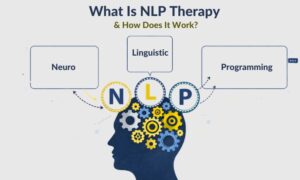
Neuro Linguistic Programming (NLP) functions as a mental training method. It connects our cognitive processes with our linguistic abilities and our behavioral patterns. It teaches that our thought patterns and linguistic choices create our emotional states, and behavioral patterns.
Neuro linguistic programming benefits employ targeted exercises to assist individuals in overcoming their detrimental patterns and emotional cycles while achieving more tranquil mental conditions. It aims to help individuals recognize their mental reactions and transform those reactions into constructive mental states.
Different Kinds of Anxiety
As you now have an idea about what is neuro linguistic programming, now you should understand different kinds of anxiety:
- Generalized Anxiety Disorder (GAD)
The disorder causes people to maintain an ongoing state of excessive worrying. The person finds it impossible to control their worry which exceeds the actual situation.
- Panic Disorder
Panic disorder causes people to experience unexpected panic attacks which create intense periods of fear. The episodes occur without warning and produce strong physical manifestations.
- Social Anxiety Disorder
This condition causes people to experience extreme fear during social events where they believe others will judge them. The disorder makes it extremely difficult to participate in social gatherings.
- Specific Phobia
Specific phobia describes a psychological condition which causes people to experience extreme and irrational fear toward specific activities. The fear which people experience about triggers exceeds the actual threat which those triggers present.
- Post-Traumatic Stress Disorder (PTSD)
PTSD develops after a person goes through or observes a traumatic incident. The condition leads to repeated distressing memories which include nightmares that occur during non-threatening situations.
- Obsessive-Compulsive Disorder (OCD)
OCD describes a mental health disorder where people experience two main types of symptoms through which they must deal with their obsessive thoughts.
Best NLP Exercises for Anxiety to Calm Your Mind Naturally
People with anxiety can use NLP therapy for anxiety which provides effective results. The exercises provide you with methods to create new thought patterns which will help your body achieve a natural state of relaxation.
Here are the best NLP exercises for anxiety to calm your mind naturally:
1. Anchoring Technique
Anchoring creates a method which enables you to achieve instant calmness when anxiety begins.
First, you need to bring to mind the moment which brought you both peace and confidence. Then, close your eyes and relive that moment fully. The strong feeling will begin to develop so you need to press your thumb and finger together.
When anxiety strikes you need to press your thumb and finger again. Your mind connects that action with the calm state. You will learn to manage your anxious feelings through repeated practice. A professionally guided NLP training for corporate can help you for better results.
2. Reframing Technique
You can change your interpretation of a stressful event through the process of reframing. This is one of the best stress relief techniques. When a negative thought appears, pause and question it. You should ask yourself whether there exists another perspective to view the situation. The statement “This will go wrong” should be replaced with “This is a learning opportunity.”
Your brain processes information based on its meaning instead of actual reality. Daily practice of this technique helps people reduce their tendency to experience automatic distress.
3. Swish Pattern Technique
The swish pattern enables you to substitute your fearful mental images with positive mental representations. First, you have to identify the picture in your mind that triggers anxiety. Then create a strong image of yourself feeling confident and calm.
The process of “swishing” enables you to quickly remove the anxious image and bring in the confident image. Your brain will select the calm image as its preferred option after you repeat this process multiple times. The exercise functions by changing how you subconsciously respond. To learn the technique, an NLP practitioner course can help you better.
4. Pattern Interrupt Technique
When you catch yourself overthinking, stand up, clap your hands, or change your posture. This is the Pattern Interrupt Technique. You should take a deep breath while observing your immediate surroundings.
Your brain experiences a reset when sudden changes occur. The process prevents the development of negative patterns. Your brain will develop a new understanding that prevents your mind from becoming trapped in anxiety states.
5. Future Pacing Technique
Future pacing technique prepares your mind for upcoming stressful events. You should close your eyes to see yourself handling the situation with composure. You should see yourself speaking with confidence while maintaining steady breathing and experiencing a feeling of relaxation.
The mental movie should display positive images with sharp details. Your mind will execute the serene pattern which you already practiced when the time to perform arrives.
For better results, you must consult with a professional Neuro Linguistic Programming trainer in India.
How to Choose the Right NLP Exercise for Your Anxiety Type?
You have to understand that different anxiety needs different focus. The right NLP technique for anxiety matches your anxiety trigger and mental response. You should choose your treatment method according to your specific anxiety triggers and mental response patterns.
You knew about what is NLP therapy but now it’s time to know the NLP exercises for your anxiety type:
- If anxiety hits suddenly, you use a pattern interrupt technique.
- For repeated negative thoughts, you can prefer reframing exercise.
- For public performance fear, you must use future pacing technique.
- For constant worry, you should use anchoring daily.
- For mental image anxiety, you can prefer visualization shift technique.
- For confidence building, you can combine anchoring and future pacing technique.
Tips to Maximize Results from NLP Exercises
You should practice NLP methods for stress and anxiety regularly to achieve optimal results. NLP exercises help you to build deeper emotional control.
- Set a regular practice time each day
- Start with one technique and master it
- Record anxious triggers in a journal
- Review progress each week
- Mix techniques for variety and stronger results
- Use mindful breathing before exercises
- Stay patient; change takes time
Conclusion
Anxiety does not disappear overnight, but you can manage it with the right approach. The NLP exercises for anxiety treatment enable you to eliminate negative thinking patterns while decreasing emotional reactions. They also develop your stronger mental discipline.
The practice of NLP techniques for anxiety makes you better at handling your emotions while your body reduces stress in a natural way. It brings you weightless and transparent thoughts and helps you to conquer anxiety and develop a self-assured mindset.
Interested in joining a NLP training under the top professionals? Connect with Dr. Himanshu Gaur who offers NLP training in India, enabling you to learn proper NLP exercises with a structured method and practical steps.