Personal growth depends largely on how we think, speak, and act in everyday situations. Neuro Linguistic Programming (NLP) techniques focus on improving these three areas by helping people understand the connection between thoughts, language, and behaviour.
NLP also plays an important role in mental wellness, as it helps calm an anxious mind and manage daily stress by changing negative thought patterns into positive, balanced responses. By practicing NLP techniques for success regularly, individuals can feel more in control of their emotions and reduce mental overload in day-to-day life.
NLP offers practical methods to build confidence, improve communication, manage emotions, and develop a positive mindset. These techniques are easy to learn and can be applied in real life—during studies, at work, in business, or in personal relationships.
Students, professionals, entrepreneurs, and salespeople can all benefit from neuro linguistic programming techniques as they help improve performance and self-awareness. Many learners also prefer studying these techniques through neuro linguistic programming techniques PDF or PPT formats, as they provide clear explanations and step-by-step learning.
What is Neuro-Linguistic Programming?
Neuro-linguistic programming is the psychological means of communication used to determine how the brain-neuro, language-linguistic, and learned ways of behaving-programming-affect human experience. For anyone searching what is NLP, it focuses on understanding exactly how successful people think and act, then modeling those behaviors for personal growth, communication, leadership, and sales. Nowadays, NLP is widely applied in therapy, coaching, corporate training, and neuro-linguistic programming sales techniques.
Why NLP Techniques Matter for Personal Growth
Neuro linguistic programming techniques are also effective due to their effects at a subconscious level as the mind forms its own habits and beliefs.
Importance of NLP Techniques:
- Improves self awareness: Helps you become aware of your thinking processes, emotional triggers, and reactions
- Enhances communication skills: NLP enhances human communication skills, whether verbal or non-verbal.
- Builds emotional control: It teaches individuals ways to manage stress, fear, anxiety, or negative emotions.
- Boosts confidence and motivation: Reprograms limiting beliefs to empowering beliefs.
- Supports career and sales success: Widely used in neuro linguistic programming sales techniques to influence ethically.
Accelerates personal transformation Delivers faster results compared to traditional self-help approaches.
Top 10 Neuro Linguistic Programming Techniques
1. Anchoring Technique

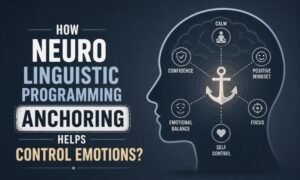
The Anchoring Technique is one of the most powerful neuro linguistic programming techniques used to access positive emotional states at will. It works by associating a specific emotional feeling, such as confidence, calmness, or motivation, with a physical trigger like touching fingers, a word, or a gesture. Once the anchor is created, activating the trigger brings back the same emotional state instantly, hence this technique finds great use for personal development and emotional control.
- Emotional State Creation: This is a procedure in which one remembers an event that happened sometime in the past and gives one a great positive feeling. The memory is relived with full intensity, including thoughts, feelings, and sensations. A more powerful emotion generates a better anchor.
- Association of Triggers: A specific physical activity comes into play at the height of emotion.It can take the form of an initiating touch, a gesture, or even a catchword used repeatedly.The mind starts associating the emotion with the trigger.
- Anchor Activation: Later on, the same trigger is employed in real-life situations.The subconscious mind recalls the associated positive emotion automatically. This helps in managing the stress, fear, and anxiety of performance considerably.
2. Swish Pattern Technique

The Swish Pattern Technique is an engaging neuro-linguistic programming technique that puts into practice the substitution of negative habits, fears, or any undesirable behavior with a positive, desired response. It builds upon making the subconscious mind automatically shift from an unwanted mental image to one that is motivating and empowering. In time, these techniques break previous patterns and create positive behavioral change with ease.
- Identify the Negative Pattern: First, he recognizes an undesirable thought, habit, or behavior trigger.A clear mental picture of this negative situation is built.The awareness of this pattern is necessary for any type of effective change.
- Developing an Image of the Desired Outcome: A powerful, positive mental image is created of the desired behavior or result.This image should evoke confidence, success, or positive change. The stronger the imagery, the stronger the impact on the mind.
- Swish and Replace: The positive image immediately replaces the negative one in the mind.This process is repeated several times to train the subconscious response. Eventually, the mind automatically selects the positive pattern.
3. Visualization Technique

One common neuro-linguistic programming technique is called the Visualization Technique; it involves the clear mental creation and imaging of a goal or a successful outcome. This technique enables the subconscious mind to believe in success through repeated imagination of positive results. Athletes, entrepreneurs, and professionals use visualization in order to improve confidence, enhance focus, and overall performances.
- Creating Mental Image: The individual vividly imagines a certain goal or a certain success scenario. This includes the visual details, emotions, sounds, and physical sensations. The sharper the picture, the stronger the influence in the subconscious mind.
- Emotional Involvement: It is at this point where your visualization will be most effective, since positive emotions are fully involved in it. Feeling confidence, excitement, or happiness strengthens belief in success. Emotions make the brain treat imagined success as real experience.
- Reinforcing Positive Outcomes: Repeated visualization conditions the mind to expect success. This reduces anxiety, self-doubt, and stage fright. Behavior automatically falls in line with the visualized outcome over time.
4.Rapport Building Technique

The rapport building technique is an important Neuro-Linguistic Programming technique that establishes trust, understanding, and harmony between people. This focuses on communication style alignment, body language, and tone in establishing a natural connection with others. The technique is considerably helpful in the areas of leadership, counseling, and coaching, as well as in Neuro-Linguistic Programming Sales Techniques, towards enhancing inter-relationships with people.
- Matching Body Language: This involves inconspicuously mimicking a different person’s posture, gestures, or movements. It creates familiarity and comfort at a subconscious level.When it is natural, that is where the trust is instant.
- Mirroring of Voice and Tone: He will modify his tone, speed, and volume to mirror that of the other person.This parallelism creates a feeling of ease and camaraderie in conversational exchanges.It improves openness and increases understanding.
- Language Pattern Alignment: Using similar words and expressions as the other person strengthens connection.It makes communication more relatable and effective. This enhances influence without being manipulative.
5. Meta Model Technique

It is one of the most potent neuro linguistic programming techniques used for explaining unclear communication and challenging restricting beliefs. It is utilized to confront unclear expressions of thoughts, assumptions, and thinking distortions that guide understanding. Thus, it helps individuals reach clarity of thoughts by asking precise questions. This technique helps one improve their reasoning ability by perceiving expansion of their reality.
- Language Gaps Identification: This step involves recognizing unclear and incomplete statements in communication. Generalizations, deletions, and distortions are particularly identified.The awareness of these knowledge gaps will help in a more thorough understanding.
- Asking Clarifying Questions: Some questions are asked to find missing information.These are some questions to challenge assumptions and beliefs. It also helps prevent confusions and misconceptions.
- Expanding Thought Patterns: The technique helps develop broad thinking skills too.It helps individuals see situations from different angles. This results in improved problem-solving and decision-making.
6. Milton Model Technique

The advanced form of Neuro Linguistic Programming is the Milton Model Technique, which influences the subconscious mind with a positive approach using indirect and suggestive language. The technique has been named after Milton Erickson and is practiced for coaching, therapy, and persuading people into particular states of mind. The technique helps people to change their minds positively without direct influencing.
- Use of Vague Language: The technique it employs involves open-ended, general statements.This enables interpretation by the subconscious mind of the listener in a personal manner.It provides greater internal engagement.
- Embedded Suggestions: These positive suggestions creep in unnoticed in day-to-day conversation. In keeping with that, the suggestions above circumventThey promote positive thinking and natural behavior changes.
- Storytelling and metaphors: Stories and metaphors are used to communicate a message in an indirect way. The subconscious mind readily accepts teachings through stories. Thus, communication can be powerful and persuasive.
7. Timeline Therapy Technique

The Timeline Therapy Technique is an influential technique in the application of neurolinguistic programming, which helps an individual relocate both positive and negative emotions in their past, present, and future, in an effort to create a positive future mental attitude. As a powerful approach within NLP therapy, this technique is instrumental in the removal of personal development barriers such as fear, guilt, and anger.
- Identifying Emotional Events: The person recognizes significant past experiences associated with negative emotions.These occurrences are psychologically allocated in the personal timeline.The first step in curing comes from the knowledge of emotional origin.
- Releasing Negative Emotions: The technique enables people to view events in the past in a detached manner.Negative emotions are simulated without any pain involved. This promotes a sense of emotional freedom and mental clarity.
- Future Reprogramming: Positive beliefs or desired outcomes are projected into the future timeline. The mind learns to expect success and confidence. This enhances motivation and goal-oriented behavior.
8. Chunking Technique

The Chunking technique is a useful neuro linguistic programming technique that is practiced to help organize and simplify thinking processes. Individuals benefit greatly by using the Chunking technique, as it helps to break down complex ideas into smaller ideas or to link smaller ideas into bigger ones, thereby enhancing their learning and thinking ability.
- Chunking Down: It divides complex and large tasks into simpler steps.It helps goals feel attainable, which decreases feelings of mental overload. Chunking down enhances concentration and increases productivity.
- Chunking Up: Chunking up means looking at a larger overall picture or goal.It helps to tie individual tasks to goals.This enhances motivation and clarity.
- Lateral Chunk: This technique aims at exploring new avenues to look at or Encourages Creativity and Flexible Thinking “Lateral chunking can aid human problem-solving.
9. Mirror and Matching Technique

Mirror and Matching Technique is a very commonly employed Neuro Linguistic Programming technique that helps build trust and rapport while engaging in communication with others. This technique involves mirroring the body language, gestures, tone of speech, and speech patterns of the person you are interacting with, which ultimately serves the purpose of enhancing your communication and making it more effective and comfortable for you.
- Mirroring Body Language: This consists of mimicking postures, gestures, or movements present in another person in a manner.It creates a sense of comfort and psychological alignment.When carried out naturally, it enhances mutual trust.
- Matching Voice Patterns: The speaker modifies their tone, speed, and volume to match with the listener.Similar voice patterns facilitate smooth conversation.This also facilitates better understanding.
- Aligning Language Style: Using similar words and phrases creates a sense of connection and relatability.It makes the person being listened to feel respected. This approach is particularly effective in leadership and selling communications.
10. Reframing Technique

The reframing technique is one of the main neuro linguistic programming techniques used to change one’s perspective or way of looking at a certain situation, experience, or a particular act of behavior. Rather than making a reaction to a particular situation based on one’s emotional feelings, the reframing technique provides an individual with a way to look at the particular circumstance from a positive viewpoint.
- Context Reframing: The factor most emphasized is changing the situation or context in which the particular behavior is regarded. Something negative in one situation might prove useful in another.It enables people to identify hidden advantages in difficult situations.
- Meaning Reframing: Change in meaning reframes the meaning of an occurrence.The situation remains the same, but the emotional effect is diminished.This technique develops optimism as well as a controlled emotional state
- Belief Reframing: Limiting beliefs are recognized and replaced with empowering beliefs.This enables the breaking of mental barriers that limit growth. It promotes feelings of increased confidence, flexibility, and positive decision-making.
6 Practical Steps to Practice NLP Every Day
Step 1: Set Clear Intentions: Identify the emotional condition or behavior you want to improve by applying NLP methods.
Step 2: Practice Anchoring: Develop “anchors” for feelings of confidence, calmness, or focus, which you can call on during challenging times.
Step 3: Observe Language Patterns: Be mindful of your self-talk and use empowering words in place of debilitating words.
Step 4: Use Visualization Daily Take 5-10 minutes visualizing your goals as already reached.
Step 5: Building Rapport Consciously Practice using appropriate tone with body language during conversations.
Step 6: Reflect and Improve Review your daily interactions and consider how NLP approached the situation best.
Key Benefits of NLP Techniques
Techniques used in neuro linguistic programming promote holistic personal as well as professional growth.
Key Benefits Explained:
- Improved mindset and clarity: Eliminates confusion and negative thought processes.
- Stronger communication skills: Make a conversation persuasive and meaningful.
- Better emotional intelligence: Promotes empathy and emotional sensitivity.
- Improved productivity: Assist in overcoming procrastination and mental blocks.
- Sales and leadership growth: Essential reading for professionals using neuro linguistic programming sales techniques.
- Long-term personal growth: Creates lasting behavioral changes.
Common Myths About Neuro Linguistic Programming
In fact, NLP fosters ethical persuasion and self-awareness.
- Only therapists use NLP- It finds wide usage among coaches, trainers, marketers, and leaders.
- Results are immediate and permanent- NLP is similar to working out in that consistent practice will provide sustainable results.
- NLP is hypnosis- It includes hypnotic language but isn’t hypnosis in itself.
- No scientific basis- NLP integrates psychology, the science of communication, and behavioral modeling.
- Anyone can learn NLP overnight. As with any skill, mastery of NLP takes time and training.
Conclusion
The neuro linguistic programming techniques are effective tools for personal development, communication, and achieving success in life. Understanding the concept of neuro linguistic programming techniques and applying them in daily life will help in fast track achievement of life goals and overcoming barriers in life.
Whatever be the mode of learning through neuro linguistic programming techniques pdfs, neuro linguistic programming techniques ppt, or through any of the online nlp courses, it is important to make practice a regular aspect of life. For more effective learning and training in such fields, learning from the best nlp trainer available in India is a good option.